What reining asks of a horse
The NRHA rulebook says any movement a reining horse makes on its own counts as a lack of control. Cutting asks for the opposite. Both are western.
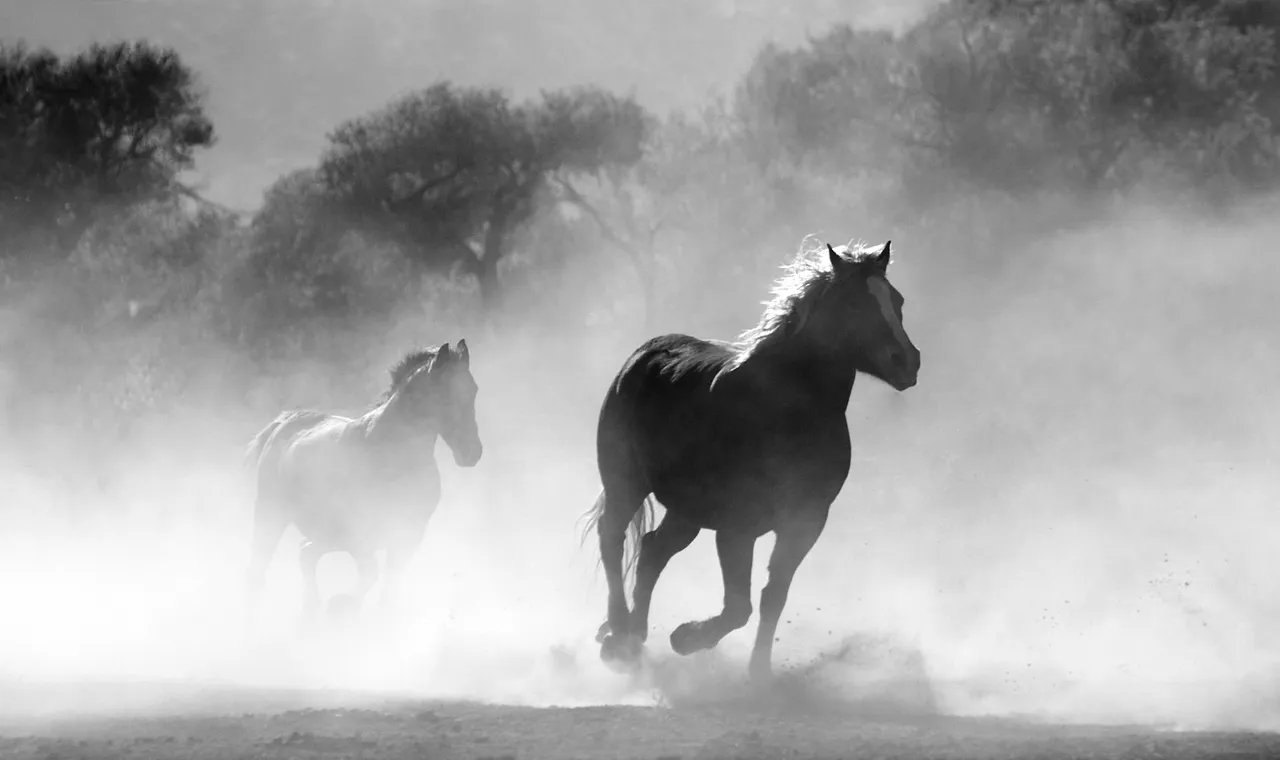
I have not watched reining in person. Everything below comes from video and from the rulebook, and the rulebook turned out to be the more surprising of the two.
Reining is the western pattern class: a horse ridden alone through a set sequence of large fast circles and small slow ones, flying lead changes, spins on the spot, rollbacks, a backup, and the sliding stops the sport is famous for. No cattle, no obstacles, no clock.
The sentence that reframed it for me
The National Reining Horse Association’s rules for judging open with a definition, and it is worth reading slowly.
To rein a horse is not only to guide him, but also to control his every movement. The best reined horse should be willingly guided or controlled with little or no apparent resistance and dictated to completely.
Then the line that stopped me: any movement on his own must be considered a lack of control.
I had just spent a week reading about cutting, where the rider drops the rein hand and the horse reads a cow on its own initiative, and where a horse with that initiative is the whole product. Here is the neighbouring discipline, run by neighbouring people, on the same kind of horse, defining initiative as a fault.
Both are western. Both descend from the same working tradition. They have arrived at opposite answers about how much opinion a horse should have.
What the pattern asks for
The manoeuvres are specific and mostly self-describing once you know the words.
A spin is a series of 360-degree turns over a stationary inside hind leg, with the drive coming from the outside rear leg and the front legs. A rollback is a 180-degree reversal: run, stop, turn the shoulders back over the hocks, and leave again at a lope, all as one continuous motion. A sliding stop is the horse bringing its hind legs underneath itself and sliding on its hind feet while the front end keeps walking.
Scoring runs from zero upwards with 70 as an average performance, and each manoeuvre in the pattern is marked separately in half-point steps between -1½ and +1½.
The rulebook admits it is a show
After the faults are deducted, the NRHA says credit should be given for smoothness, finesse, attitude, quickness and authority — while using controlled speed which raises the difficulty level and makes the horse more exciting and pleasing to watch to an audience.
To an audience. In the rulebook.
I did not expect to find that written down, and I respect it. Reining is not pretending that the difficulty exists for the cattle’s benefit. The speed is there because it is harder and because it is better to watch, and the governing body says so in the same paragraph where it defines control.
Where this leaves my own argument
I have been telling myself, and anybody who asks, that I prefer western riding because it is about tasks a horse and rider would genuinely do. Gates get opened. Cattle get held. Somebody has to back out of somewhere awkward.
Reining is the discipline that argues with that. A sliding stop of the length these horses produce is not a thing anybody needed on a ranch. Spins are a stylised version of a turn, run past the point where the working version stopped being useful and into the point where it becomes impressive. It is the western class that has travelled furthest from the job, and it is honest about the direction of travel.
So my preference is narrower than I have been stating it. What I actually like is the classes where the question has an answer outside the arena, and reining has quietly become something else: a horsemanship exhibition of extraordinary precision that is judged as an exhibition.
That is not a criticism, and I am not in a position to make one from the wrong side of a screen. It is a correction to my own position, which is the more useful thing to come out of reading a rulebook.
I would still like to stand at the rail and watch one. The dust alone looks worth the trip.