What colour is that horse
Sorrel or chestnut, dun or buckskin, grullo, roan. Three registries define these three different ways, and one of them uses grey to mean something else entirely.
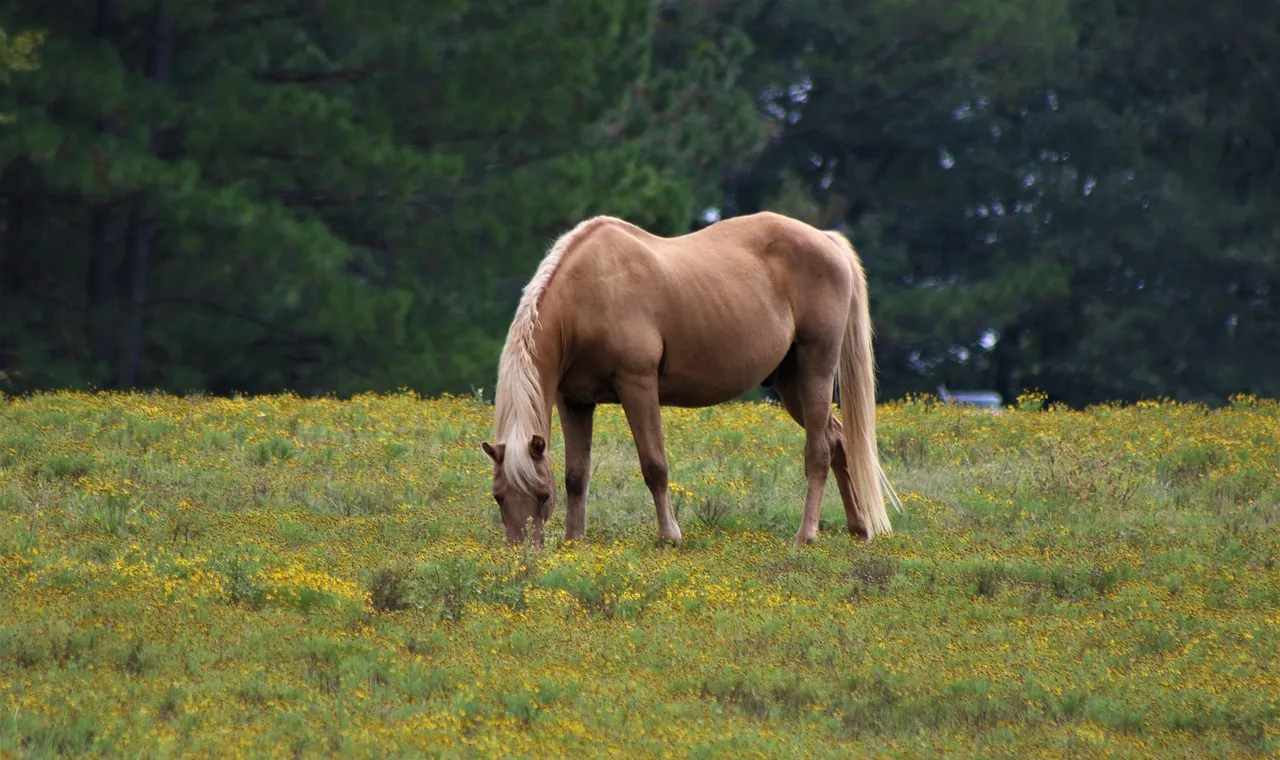
Ever heard a horse being called a grullo, and realised it is not the name of the horse, it is the colour?
Colour vocabulary is tough for me. There are so many to remember and you have to really know what you are looking for. If you follow along on Facebook or Reddit you will also stumble upon heated discussions about what colour a specific horse is.
The useful thing about a breed registry is that it cannot afford ambiguity: every horse has to have a colour written on a document, so somebody had to define them. These are AQHA’s registration definitions, which are the plainest I have found.
But be aware that AQHA only covers Quarter Horses. Other associations have different colours and, as it turns out further down, sometimes use the same word to mean a different thing.
The reds
Sorrel is reddish or copper-red, with mane and tail usually the same colour as the body, though they may be flaxen.
Chestnut is dark red or brownish-red, with mane and tail usually dark red or brownish-red, and again possibly flaxen.
That is the entire difference: sorrel is the brighter copper one, chestnut the darker brown-red one. Outside the American stock horse world the word sorrel is barely used and both are called chestnut.
The dark ones
Black is true black with no light areas, mane and tail black.
Brown is brown or black with light areas at the muzzle, eyes, flank and inside the upper legs, mane and tail black.
Bay is where the entry above these begins: body colour ranging to brown, mane and tail black, usually with black on the lower legs.
The test between black and brown is the muzzle. Look at the soft parts.
The ones with a stripe, and the ones without
This is where it gets a bit more tricky, because two of these look almost identical until you know what to check.
Dun is yellowish or gold, mane and tail black or brown, and it has a dorsal stripe down the spine, usually zebra stripes on the legs and a transverse stripe over the withers.
Buckskin is yellowish or gold, mane and tail black, black on the lower legs, and typically no dorsal stripe.
Same body colour. Only the stripe is the difference.
Red dun is the dun pattern in red: yellowish or flesh-coloured body, mane and tail red, flaxen, white or mixed, with a red dorsal stripe and usually red leg stripes.
Grullo is smoky or mouse-coloured, and the definition contains the detail that makes it click: not a mixture of black and white hairs, but each individual hair mouse-coloured. Mane and tail black, usually a black dorsal stripe.
Palomino is golden yellow with a white mane and tail, and typically no dorsal stripe.
And then there are the mixtures
Grey is a mixture of white with any other coloured hairs. The important part of the definition is what happens over time: grey horses are often born solid or almost solid and get lighter with age as more white hairs appear. Therefore grey is more a process than a colour.
Roan is a more or less uniform mixture of white with coloured hairs over a large part of the body, usually darker on the head and lower legs. Red roan mixes white with red, blue roan mixes white with black, and bay roan mixes white with red but keeps a black mane and tail and black on the legs.
The difference between grey and roan is the direction of travel. A roan stays roan. A grey keeps going.
The leg markings
The same rulebook defines these by how far up the leg they go.
Coronet: any narrow marking around the coronet, just above the hoof. Half pastern: includes only half the pastern above the coronet. Pastern: the entire pastern. Sock: extends from the coronet halfway up the cannon bone, or halfway to the knee on a foreleg, halfway to the hock behind. Stocking: a full marking to the knee on the foreleg and to the hock behind. An extended sock.
That is it. Five words, each one is only about how far up the leg it goes.
Five colours and nothing else: the Norwegian Fjord
The Fjord horse registry recognises five colours, and every one of them is a dun.
Brown dun, which Norwegians call brunblakk and which is by far the most common. Red dun, rødblakk. Grey, grå. White dun, ulsblakk. Yellow dun, gulblakk.
Those five were fixed by a vote. At the annual general meeting of Norges Fjordhestlag in 1980 it was agreed that these and no others are the genuine and typical colours of the breed. The standard goes further than AQHA does about anything outside the list: markings and colours atypical of the breed must be avoided and discriminated against.
The mane is where you read a Fjord. A dark stripe of hair runs down the middle of the mane, forelock and tail, with white guard hairs on both sides of it. On a red dun that middle stripe is always darker than the body but never black. On a grey the forelock and muzzle are darker, where the brown and red duns are light there.
The same word, a different horse
Here is the trap, and it is why “the naming convention should be similar” turns out not to be quite true.
AQHA’s grey is a mixture of white hairs with coloured ones, on a horse that is born dark and gets lighter every year. The Fjord’s grå is a dun shade, running from light silver to dark slate, with a black stripe in the mane and down the spine. It does not lighten. It is not going anywhere.
Same English word. Two registries. Two completely different animals.
Red dun exists in both lists as well, and means something close but not identical in each.
Over forty colours: the Icelandic horse
Then the opposite policy entirely.
The Icelandic horse has over 40 colours and up to 100 variations, and with few exceptions most known horse colours occur in the breed. Three base colours, black, red and bay, with skewbald, dun, cream, grey, silver dapple, splash-skewbald and roan appearing over them, often in combination.
The official breeding goal is to preserve all colours naturally occurring in the breed. Not just permitted in the studbook. Encouraged.
Three registries, three answers
Put them next to each other and they are not three versions of the same list. They are three different opinions about what colour is for.
AQHA polices it. White past a set of anatomical lines is recorded on the certificate as an undesirable trait, and the horse cannot show in halter.
The Fjord registry fixed it. Five colours, decided in a room in 1980, everything else discriminated against.
Iceland collects it. Over forty colours, all of them allowed, variety written into the breeding goal.