Voltige was invented in post-war Germany. Nobody told Mongolia.
My nine-year-old does gymnastics on horseback. I went looking for where the sport came from and found kids on the Mongolian steppe who never needed it invented.
My daughter is nine and she does Volti. Voltige, vaulting, gymnastics on the back of a moving horse. She can trot and gallop as well, but the Volti is the part I cannot look away from, because a fair amount of it involves standing up on an animal that is going somewhere.
That is not me being dramatic about it. The stand is one of the compulsory exercises, scored out of ten like everything else, and the horse gets a mark of its own worth nearly a third of the total. The horse is being judged too. I find that lovely and I did not know it until this year.
I stand at the side of that and I love it, and I understand about a third of what I am looking at. So I did the thing I always do when I want to understand something and cannot get at it directly, which is start reading. That was a mistake, in the sense that it was six weeks ago and I am still reading, and almost none of it has been about voltige.
The sport has a start date
Here is what sent me sideways. Modern vaulting is not ancient at all. It was put together in post-war Germany, on purpose, as a way of getting children onto horses, and I have that from Wikipedia.
So the sport my daughter does is roughly seventy years old. It was designed, in another country, before either of us was born, to solve the problem of how you get a child near a horse.
Which is a perfectly good problem to solve. It is just that people have obviously been climbing about on horses since there have been horses to climb on, and the moment I went looking for that part, I ended up in Mongolia and did not come back for a month.
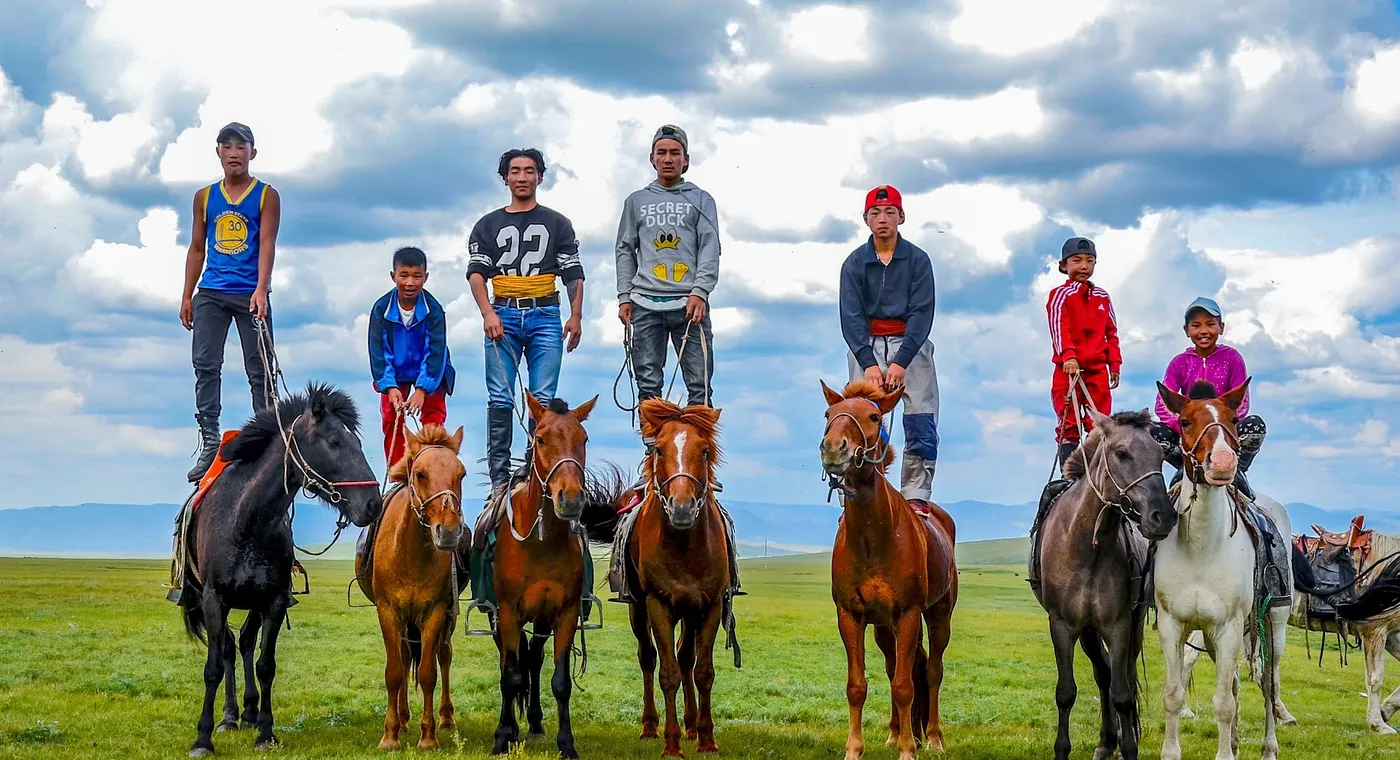
Then I found the photograph at the top of this post
Those are kids on the Mongolian steppe, and four of them are standing upright on the backs of their horses. In tracksuits. On open grass, in a line, apparently for no reason beyond that they can.
No lunge line. No lunger. No surcingle with handles, no thick pad, no circle, no helmet, and nobody counting them in. Nobody had to design a programme to get those children onto horses.
That is the thing I have been chewing on for a month. My daughter does a refereed version of what is happening in that photograph — scored out of ten, seven named exercises, thirty per cent of it belonging to the horse — and the version she does had to be invented for her. They just get on and stand up.
The horses are part of it. Mongolian horses are smaller than the one she works on and they are not pets: they live outside, they belong to families who use them for work, and a lot of them are semi-wild in the sense that they get handled when there is a reason and are otherwise left alone.
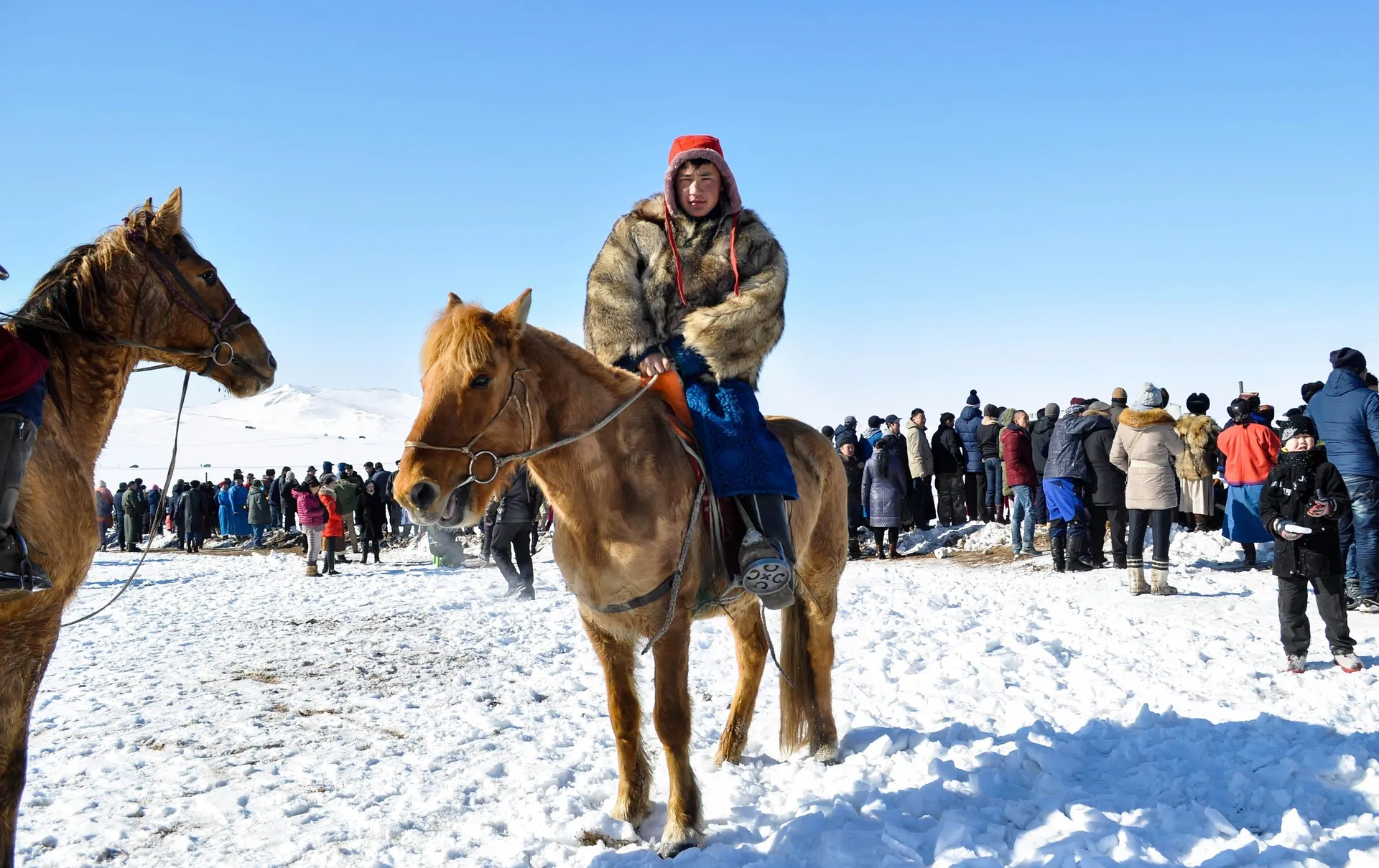
Winter, and the coat is doing most of the talking. Look at the size of the horse relative to the man on it.
Then there is the archery
Their bows were laminated things — horn, sinew and bamboo glued into one piece and drawn with the thumb. I had been imagining a bent stick. It is closer to a spring.
And they shot them at a gallop. The detail everyone repeats, and I want it to be true, is that a good archer releases in the split second when all four hooves are off the ground, so nothing is hitting the earth as the arrow leaves. I have seen it in a dozen places and none of the careful ones, so treat it as too good to check. What is on the record is a stone inscription, thought to be from 1226, saying a man called Esüngge hit a target at 536 metres. I have watched a grown adult miss a hay bale at thirty.
And then, obviously, the race
Somewhere in all this I fell over the Mongol Derby, which is the part I went deepest on and which got its own post — I wrote one, because it would not fit in here.
One thing from it belongs here, though, because it is the same idea as the horse getting its own mark. At every station a vet takes the horse’s heart rate, and it has to be back under 64 beats per minute within thirty minutes or the rider loses two hours. You cannot win by riding an animal into the ground, because the clock takes back more than you stole.
Two sports, seventy years and five thousand kilometres apart, both of which decided the horse gets a say.
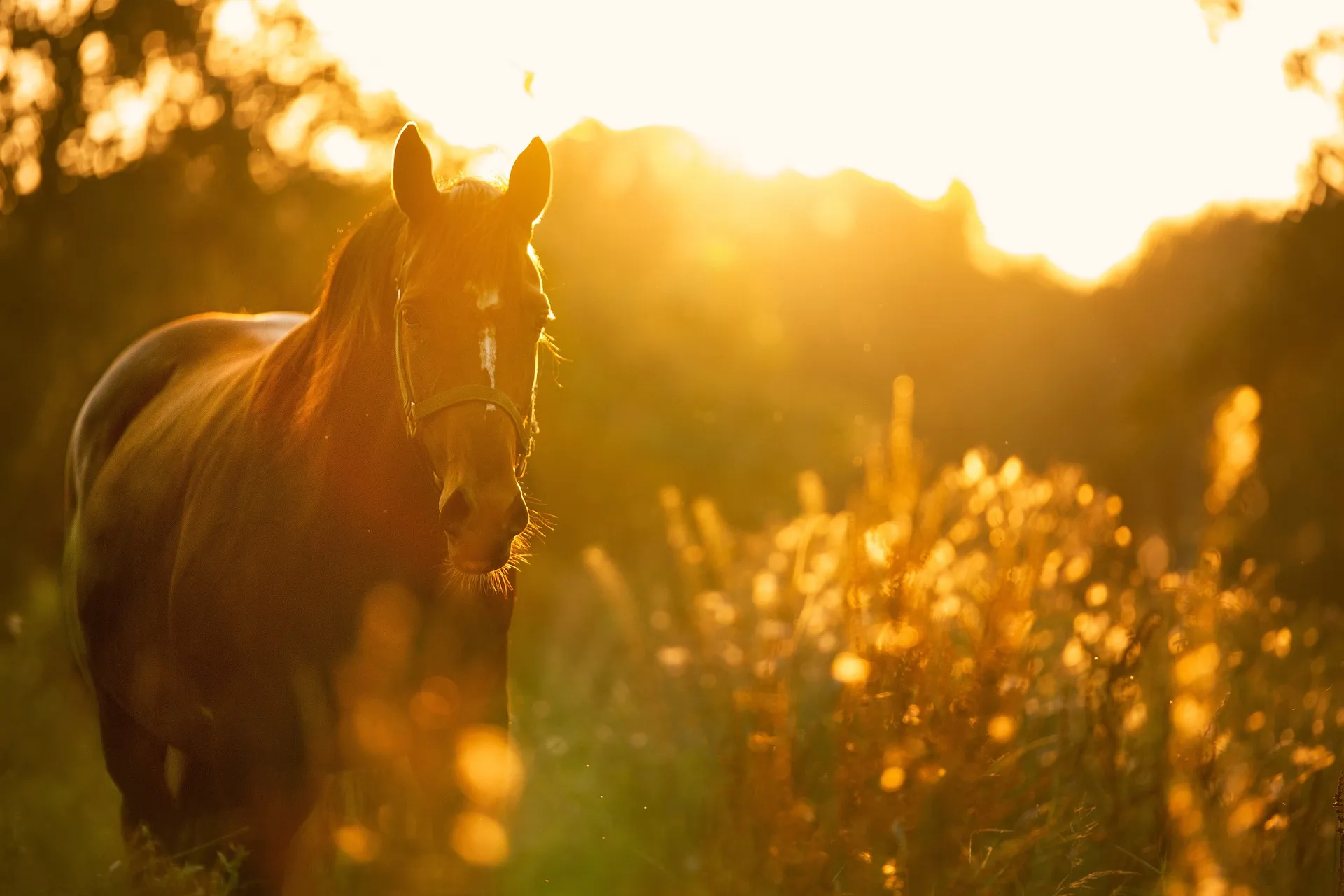
Closer to the kind of horse she works on. Enormous, warm, and extremely interested in whether you brought anything.
What I take back to the side of the arena
None of this is a knock on my daughter, and it is not a knock on Volti either. She works on a horse that is being lunged by a person whose entire job in that moment is that nothing goes wrong, and for a nine-year-old that is exactly right. The kids in that photograph are not braver than her. They are further in, and they started earlier, and they did not have to be introduced to it.
What changed is what I think I am watching. I had it filed as a slightly unusual children’s sport with a German origin story, which it is. It is also a very short branch on something extremely long. People have been standing up on moving horses, and shooting off them, and racing them across a thousand kilometres of grass, for about as long as anyone has bothered to write anything down.
She is nine and she can already do things on a horse that I will never do. That is the correct direction for this to be travelling, and I intend to keep standing at the side reading about Mongolia while she gets on with it.