Peppy San Badger
A sorrel all of Texas called Little Peppy, the ranch that says every horse it owns goes back to him, and a bronze outside Gate 42 that took three years to make.
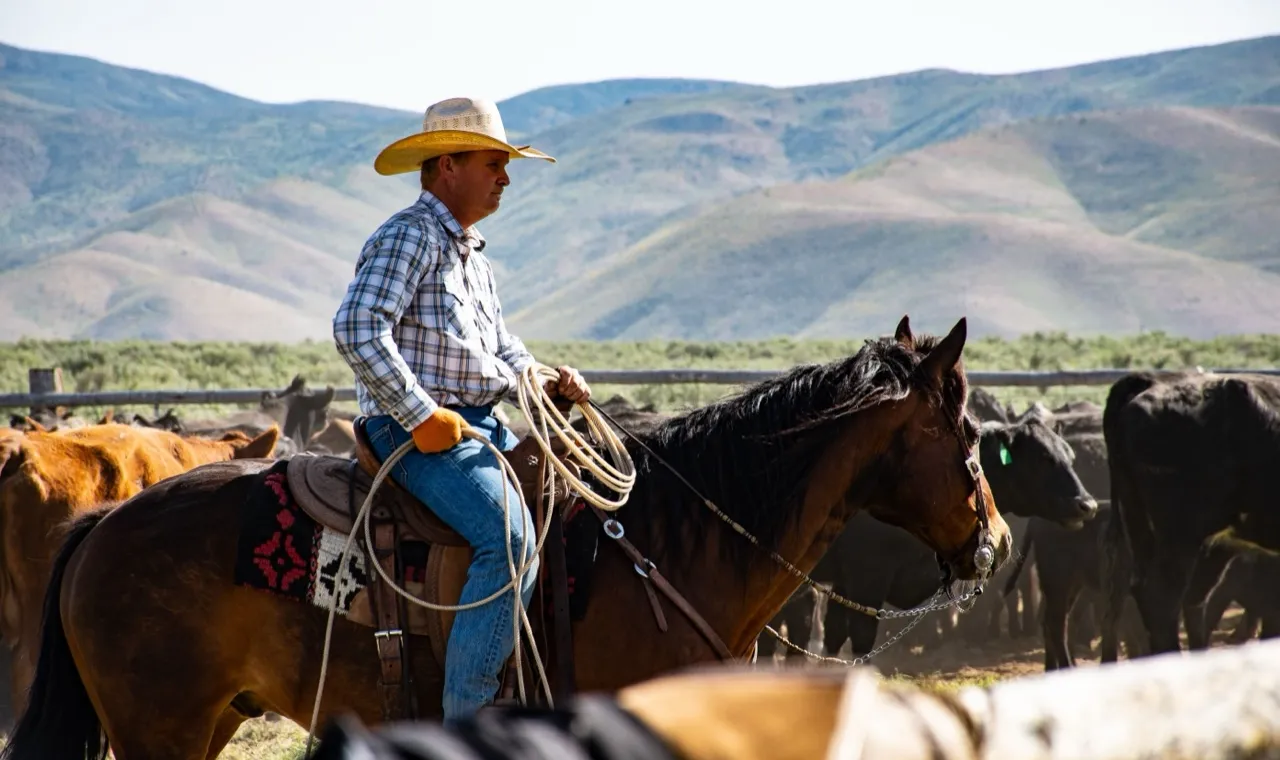
There is a gate in Fort Worth, Texas, that I want to see more than the stockyards or the rodeo, and I am aware of how that sounds. Gate 42 of the Will Rogers Memorial Center, off Trail Drive, is the entrance the competitors and their horses use every day of the cutting Futurity, and since the summer of 2020 they have walked past a larger than life-sized bronze of an old man on a sorrel horse, cutting a red cow out of a herd that is not there.
The man is Buster Welch. The horse is Peppy San Badger, and nobody in Texas has ever called him anything but Little Peppy.
The Statue First
It took the sculptor, Kelly Graham of Weatherford, three years to make, and he knew what he was making, because he used to train cutting horses for a living before he took up bronze. It was unveiled on 11 December 2019 during the Futurity. Robert Duvall was in the crowd. So was Barry Corbin. The evening’s auction included a walk-on part in Yellowstone, donated by Taylor Sheridan, which if you have read what I think that programme did to Montana you will find either fitting or very funny.
Welch was 91 that night and had won the Futurity five times, a record, on five different horses between 1962 and 1977. He had helped invent the event when he was 32. He had four world championships. He died at home in Abilene in June 2022, aged 94, and of all the horses he had ridden in seventy years the one they cast in bronze beside him was the sorrel.
A Ranch with One Idea
Little Peppy was a King Ranch horse, and King Ranch is the reason he matters as much as he does. The ranch has been breeding horses to one specification for over a century. In their own words, they want a horse that can rope, cut, ride, and work in any terrain. That is the whole brief. It is also, if you have followed this blog for any length of time, the sentence I keep circling back to about why I like western riding at all, so you can imagine how I felt when I found the biggest ranch in Texas had put it on their website as a mission statement.
They started with a colt called Old Sorrel, bought by Bob Kleberg in 1916, and they say every horse on the place still descends from him. When the breed registry was founded in 1940 the founders agreed that the grand champion stallion at the next Fort Worth show would be number one in the stud book, and the horse that won it was a grandson of Old Sorrel called Wimpy, who has a post of his own because a horse with the registration number 1 deserves one.
Where the Word Peppy Comes From
The name is a family tree, like all the good ones, and this one starts with a vet’s bill.
In the early 1950s an ageing King Ranch-bred stallion called Pep Up, then owned by the Waggoner Ranch, cut his foot badly and was taken to a clinic in Vernon, Texas. A man called Otis Gafford paid the bill, took the horse, and turned him out with an old mare of his called Belle Burnett. In 1955 she produced a sorrel filly, and Gafford called her Peppy Belle.
Peppy Belle had two sons who between them changed the sport. Peppy San, foaled in 1959, was World Champion cutting horse in 1967. His full brother Mr San Peppy came along in 1968 and was World Champion in 1974 and again in 1976, the first horse to be both the cutting association’s champion and the breed registry’s champion in the same year, and the first cutting horse to win over $100,000. He went into the Hall of Fame at six, the youngest horse ever admitted. Jan Swan Wood, who wrote her story up for a livestock paper, puts it plainly: the cutting, cow horse and reining world is populated with a majority of horses that descend from her. An old mare in west Texas that nobody thought to photograph.
King Ranch bought Mr San Peppy. Buster Welch had part-owned him and had signed on with the ranch in 1974, and it was Welch who rode him to both world titles. And in 1977 the ranch bought a three-year-old son of his, bred in Lubbock by Joe Kirk Fulton out of a mare called Sugar Badger, and that is Little Peppy.
Butkus and Clay
Welch took Little Peppy to the Futurity that December and won it. The next year they won the Derby. He went into the Hall of Fame in 1980 and finished with $172,710, at a time when his own father had only just become the first cutting horse ever to win a hundred thousand.
Tio Kleberg, whose family owns the ranch, had both stallions in front of him for years and described the difference better than any results sheet could. Mr San Peppy liked it rough; the tougher the cow, the happier he was. He was Dick Butkus, and Little Peppy was Cassius Clay. For readers on my side of the Atlantic, Butkus was an American football player famous for hitting people extremely hard, and I trust you know the other one. A great athlete with great finesse, Kleberg said. Father and son, the bruiser and the boxer.
Every Horse on the Ranch
Then he went to stud, and this is where a sorrel horse from Lubbock turns into a word you meet everywhere. He was the leading sire in cutting for most of two decades, right up until 2003, and his offspring earned more than twenty-six million dollars. King Ranch says today that every horse on the place goes back either to Mr San Peppy or to Little Peppy. Every single one, on a ranch that has been breeding since 1916.
His most important son, for the purposes of this blog, was a red roan called Peptoboonsmal, foaled in 1992 out of a mare called Royal Blue Boon. Read the name: Pep from his father, Boon from his mother, and the rest is anyone’s guess. Royal Blue Boon was the all-time leading dam in cutting, her foals earned two and a half million dollars, and in 2006 a clone of her became the world’s first commercially cloned filly, which is a sentence I did not expect to type on a Sunday.
Peptoboonsmal won the 1995 Futurity under Gary Bellenfant, was a top sire every year from the moment his first foals were old enough to show, and died in 2024 at 32 with his offspring past twenty-eight million dollars. And his daughter Chers Shadow is the mother of Metallic Cat. So the roan colt Beau Galyean bought with his truck as collateral has, on the bottom half of his papers, an old mare called Belle Burnett and a vet’s bill in Vernon, Texas.
The Paddock at Kingsville
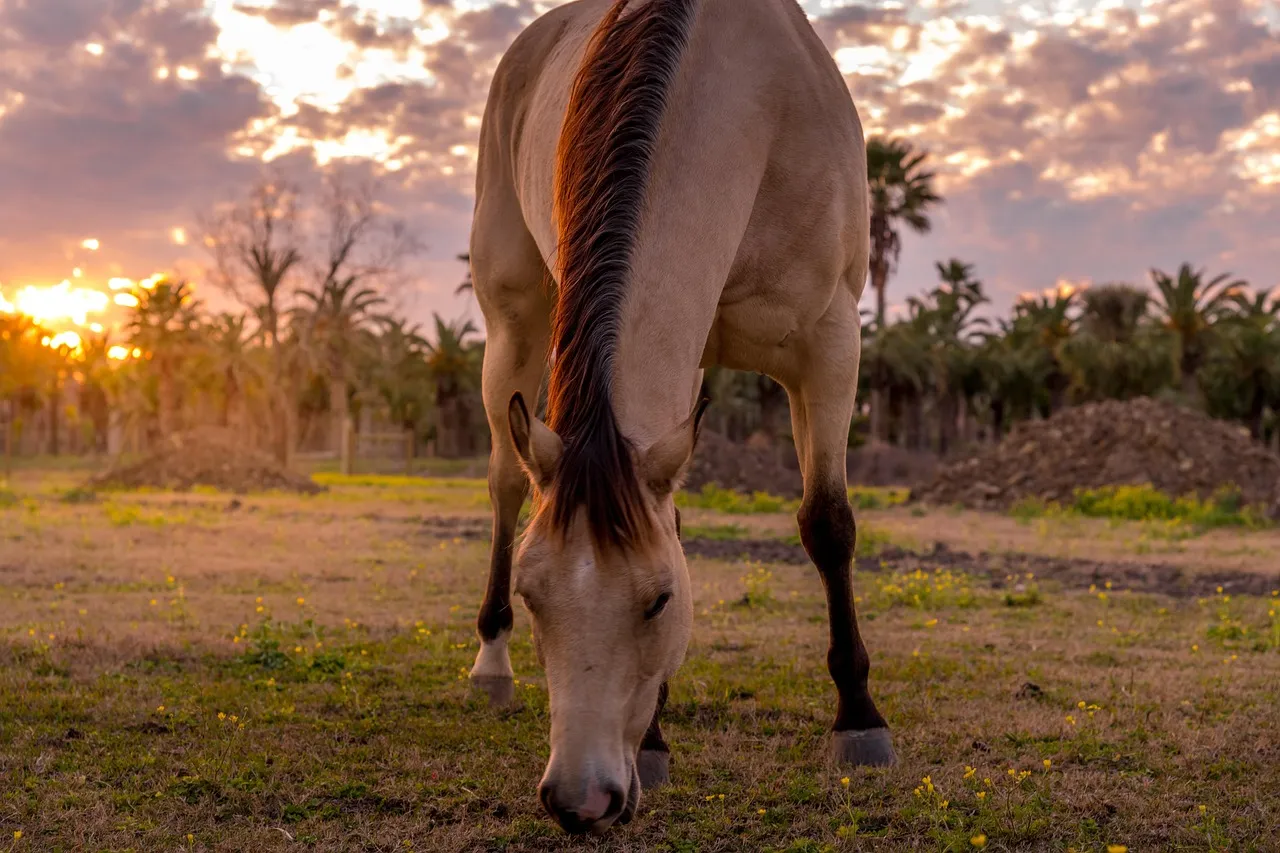
Little Peppy was put down on 8 July 2005, in his own paddock at King Ranch in Kingsville, at 31. The ranch said his age and his health had made the decision for them. By then he had been on that ranch for twenty-eight years, which is longer than most of the people working there.
I grew up on a disused farm where my dad kept animals as a hobby, and the thing I miss about it is the yard, the daily business of a place where creatures live. King Ranch is that, at a scale I cannot really picture, with one idea running through it for a hundred and ten years: a horse that can do the job. Little Peppy was the horse that did the job better than any of them, and they put him in bronze outside the gate so that every three-year-old walking in to the Futurity has to pass him on the way.
When I get to Fort Worth, I will be the Dane standing at Gate 42 with a cup of coffee, not going in. Somebody will ask if I am lost. I will say no, I am visiting a horse.